
What is AI test automation?
AI test automation uses AI to decide which tests to run, generate and repair scripts, and create test data, so teams release faster with less manual effort. Narwal offers six frameworks that apply it across the quality lifecycle: NAX, NEAT, NTVM, NILA, NADI, and NQVC.
The enterprise technology landscape is evolving faster than ever yet global organizations still face familiar pain points: fragmented quality assurance processes, rising costs, increasing compliance demands, and the pressure to release faster without compromising accuracy. In this environment, traditional tools and disjointed frameworks are no longer sufficient.
Today’s enterprises need intelligent, scalable, and AI-powered solutions that don’t just test software they enable transformation. From streamlining SAP testing to driving smarter data validation and reducing technical debt in test automation, modern organizations are looking for purpose-built frameworks to navigate complexity and deliver continuous value.
This is where specialized quality and automation platforms like Narwal’s solutions ecosystem come in tailored to meet the needs of modern digital transformation, with measurable outcomes and future-ready architecture.
The six solutions at a glance
Solution | What it does | Reported impact | Best for |
NAX | Unified automation framework for Cypress, Selenium, and Playwright | 30% higher test productivity | Teams with UI and API automation to scale |
NEAT | Testing methodology and accelerators for SAP and large enterprise apps | 15% better release quality | SAP and complex enterprise landscapes |
NTVM | Tosca audits that remove technical debt | Up to 50% better automation ROI | Teams already invested in Tosca |
NILA | AI platform for impact-based testing, script generation, test healing, and synthetic data | 20% higher in-sprint agility | Agile teams struggling with sprint-level coverage |
NADI | 8-step data quality framework with reusable validation assets | Cleaner, trusted data for decisions | Data-heavy and compliance-driven programs |
NQVC | Consultative assessment of the full quality lifecycle | 50% better overall QE efficiency | Leaders who need a baseline before investing |
The Challenges: Where Traditional Approaches Fall Short
Across industries and geographies, enterprises share a common set of challenges:
- Rising Complexity in Enterprise Applications: Legacy systems, cloud-native apps, microservices, and SAP modules often coexist—leading to brittle integrations and slow release cycles.
- Manual Bottlenecks in QA and Automation: Traditional testing struggles to scale with agility, creating delays, missed bugs, and coverage gaps.
- Inefficient Test Automation ROI: Without technical audits, test automation often accumulates debt, reducing efficiency over time.
- Inadequate Data Validation: Poor-quality or inconsistent data leads to unreliable analytics, compliance risks, and reduced business confidence.
- Lack of End-to-End Quality Visibility: Silos across business and IT hinder true lifecycle assurance and prevent proactive issue identification.
To address these challenges, enterprises need solutions that are intelligent, integrated, and impact-driven.
Why the shift from scripted automation to AI test automation matters
Scripted automation was built for a world where applications changed slowly. Today, releases ship weekly or daily, AI features change behavior between versions, and a single business process can cross SAP, cloud services, and several data pipelines. Scripts that need constant repair cannot keep up with that.
AI test automation takes a different approach. Instead of humans writing and fixing every test, AI helps decide what to test based on what changed, generates the scripts, heals them when the application shifts, and supplies the test data. People stay in charge of strategy, risk, and judgment. That is the thinking behind NILA, and it is why the frameworks in this post work best as a connected set rather than as isolated tools.
If you want to go deeper, read Beyond Test Automation: The Rise of Autonomous Quality Engineering in the AI Era and How AI Tests AI: Inside Autonomous Quality Engineering.
The Solution: Purpose-Built, AI-Driven Frameworks for Quality, Speed, and Scale
Narwal’s proprietary solutions are engineered to solve the toughest testing, quality, and data challenges faced by global enterprises:
1. Narwal Automation FrameworkX (NAX)
A unified test automation framework for Cypress, Selenium, and Playwright that boosts test productivity by 30%.
NAX empowers teams to deliver faster by enabling scalable, reusable, and low-maintenance automation across UI and API layers.
2. Narwal Enterprise Applications Testing Methodology (NEAT)
Optimized for SAP and large enterprise apps, NEAT enhances release quality by 15% using proven methodologies, structured accelerators, and test strategy blueprints that integrate seamlessly into complex environments.
3. Narwal TOSCA Value Maximizer (NTVM)
Customized Tosca audits that eliminate technical debt and improve automation ROI by up to 50%.
With focused analysis and optimization, NTVM ensures your Tosca implementation remains agile, efficient, and aligned with evolving goals.
4. Narwal Intelligent Lifecycle Assurance (NILA)
An AI-powered platform that enables smart impact-based testing, automatic script generation, test healing, and synthetic data generation—delivering 20% higher in-sprint agility and broader test coverage.
5. Narwal Data Integrity Solution (NADI)
An 8-step framework for robust data quality, NADI includes reusable assets for DB validations, file comparisons, and unstructured data testing—ensuring your business decisions are backed by clean, trusted data.
6. Narwal Quality Value Chain (NQVC)
A consultative assessment methodology that maps the entire quality lifecycle—from requirements to release—using AI-driven, human-centric principles to improve overall QE efficiency by 50%.
Which Narwal framework should you start with?
The right starting point depends on where the pain is sharpest.
- You cannot see where quality breaks down: start with NQVC. It maps the lifecycle and gives you a baseline.
- Your automation is slow to maintain or has stalled: start with NTVM if you use Tosca, or NAX if you run Cypress, Selenium, or Playwright.
- SAP releases are risky or slow: start with NEAT.
- Sprints end before testing does: look at NILA.
- Reports and analytics are not trusted: start with NADI.
Most enterprises begin with one and add others as the results show up. A quality assessment first, then targeted automation, then AI-driven testing is a common path.
The Impact: Real-World Benefits
Enterprises using these frameworks experience:
- Faster Time-to-Market with AI-powered testing and automation accelerators
- Lower Operational Costs by reducing manual effort and optimizing resources
- Enhanced Risk Management with integrated compliance, auditability, and AI-backed governance
- Smarter Business Decisions driven by validated, high-integrity data pipelines
- Long-Term Scalability through modular, future-ready platforms
- Seamless Integration across existing enterprise systems with minimal disruption
For a real example of governed, measurable AI in production, see How Narwal Helped a Leading Healthcare Technology Company Build AI Observability and Governance into its AI Platform.
Why It Matters
Enterprises today don’t need more tools—they need smarter, outcome-driven solutions that embed intelligence, accelerate transformation, and adapt as the business evolves. Narwal’s suite of platforms is designed with that vision in mind.
With strategic partnerships, deep domain expertise, and a customer-obsessed mindset, these solutions are already transforming testing, automation, and data integrity for 20+ Fortune 500 companies worldwide.
For the bigger picture on why this matters, read Trust Will Be the Competitive Advantage in the AI Economy: Why Every Enterprise Needs Autonomous Quality Engineering.
Frequently Asked Questions
QA mostly checks software for defects near the end of a release. Quality engineering builds quality into the whole lifecycle, from requirements and design to release and monitoring, and uses automation and data to do it continuously.
AI can pick which tests to run based on what changed, generate scripts automatically, repair tests that break when the application changes, and create synthetic test data. This reduces manual effort and keeps coverage broad without a matching rise in maintenance work.
Impact-based testing runs the tests most affected by a code or configuration change instead of the full suite. It shortens test cycles while keeping risk coverage high, which matters most in fast release environments.
Start with a technical audit of the existing suite to find duplicate, flaky, and outdated tests, then fix the framework issues behind them. Narwal’s NTVM does this for Tosca implementations and reports up to 50% better automation ROI.
SAP environments combine many modules, custom code, and integrations with other systems, so a small change can affect many processes. Structured methodology and reusable accelerators help teams keep coverage complete without slowing releases. That is the purpose of Narwal’s NEAT.
Software can pass every functional test and still produce wrong results if the underlying data is inconsistent. Validating databases, files, and unstructured data protects analytics, compliance reporting, and business decisions. NADI covers this with an 8-step framework.
Yes. They are designed to plug into existing enterprise systems with minimal disruption, and many teams combine them, for example an NQVC assessment followed by NAX for automation and NILA for AI-driven testing.
Ready to Transform?
If you’re looking to enhance your automation maturity, validate mission-critical data, or scale your QE initiatives—Narwal’s solutions are built to deliver measurable outcomes with speed and precision.
Explore Narwal’s AI-Powered Solutions: https://narwal.ai/solutions/
Let’s Talk, Book a free consultation: https://narwal.ai/contact-us/
References
- Narwal. “Solutions.” https://narwal.ai/solutions/
- World Quality Report 2024–2025. https://www.capgemini.com/insights/research-library/world-quality-report-2024-25/
Related Posts
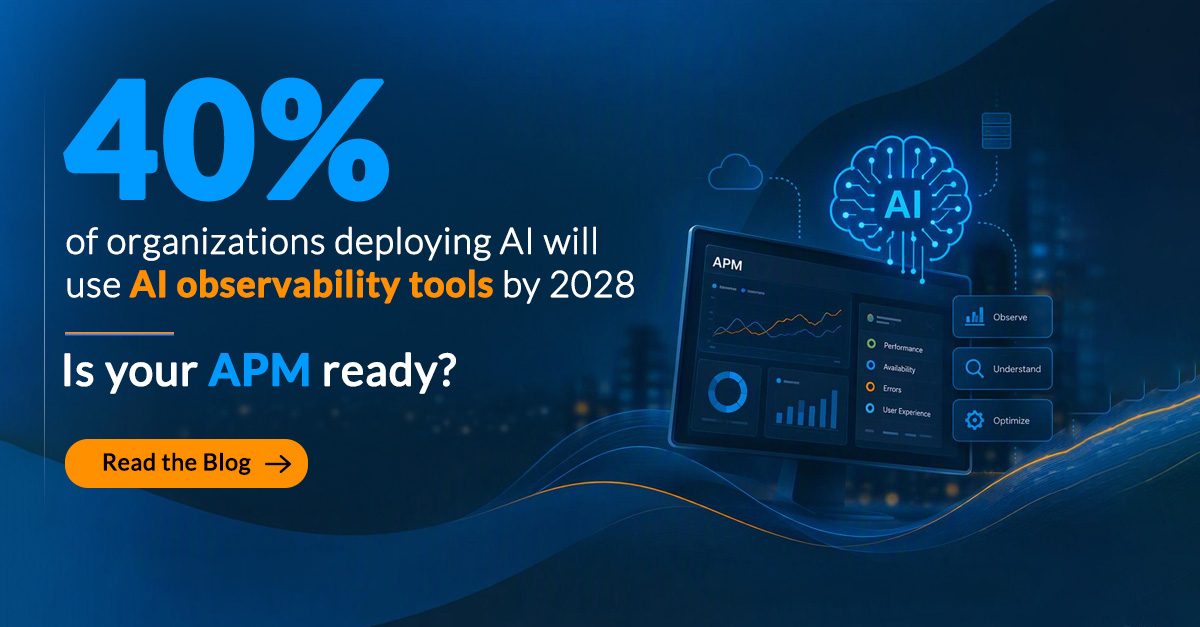
APM Trends 2026: 5 Shifts Changing How Teams Monitor Applications
A checkout page starts timing out at 2 a.m. Alerts are firing, the dashboards are red, and three teams are already debating whose service is to blame. That is the moment application performance monitoring exists…

- Oct 26

AI document processing: automating binder-to-policy review
Summary AI document processing can take the manual, field-by-field work out of binder-to-policy review, where quiet mismatches in commercial insurance are easy to miss. Narwal repurposed its existing RAG Bot accelerator into a placement-ready workflow…
- Oct 01



Headquarters
8845 Governors Hill Dr, Suite 201
Cincinnati, OH 45249
Our Branches
Cincinnati | Jacksonville | Indianapolis | London | Hyderabad | Bangalore | Pune
Narwal | © 2024 All rights reserved