

Transforming Healthcare with AI: The Role of Data Engineering and Agentic AI
The healthcare industry is undergoing a profound transformation driven by artificial intelligence. From improving patient outcomes to optimizing clinical and operational workflows, AI is redefining how healthcare organizations deliver care at scale. However, the real impact of AI in healthcare is not driven by models alone. It is driven by strong data foundations and intelligent systems that can reason, act, and adapt.
At the center of this shift are Data Engineering and Agentic AI. Together, they enable healthcare organizations to move beyond fragmented data and isolated automation toward intelligent, autonomous, and outcome focused decision making.
Why Data Engineering Matters in Healthcare
Healthcare organizations generate vast volumes of structured and unstructured data from electronic health records, medical devices, imaging systems, claims platforms, and research environments. Without robust Data Engineering, this data remains siloed, inconsistent, and difficult to operationalize.
Statista indicates that the global machine learning market is expected to exceed one hundred billion dollars within the next few years. This growth underscores the importance of scalable and governed data pipelines that can support predictive and real time intelligence. Effective Data Engineering enables healthcare organizations to unify data sources, ensure quality and compliance, and make data accessible for analytics and AI initiatives.
When healthcare data is engineered correctly, organizations gain the ability to improve diagnostics, enhance care coordination, and optimize operational efficiency across the ecosystem.
Machine Learning Built on Trusted Data Foundations
Machine learning in healthcare is only as effective as the data that powers it. Models used for disease prediction, patient risk stratification, and operational forecasting depend on clean, timely, and governed datasets. Many healthcare organizations struggle to scale machine learning initiatives due to fragmented data sources, integration complexity, and limited AI readiness.
Data Engineering addresses these challenges by operationalizing pipelines that reliably feed machine learning models. This leads to faster model development, improved accuracy, stronger explainability, and reduced operational risk. Over time, healthcare organizations are able to align AI driven insights more closely with clinical outcomes and business objectives.
Agentic AI as the Next Evolution of Healthcare Intelligence
Traditional AI systems operate within predefined rules or respond to individual prompts. Agentic AI represents a more advanced approach. Agentic systems can reason through complex problems, take context aware actions, learn from outcomes, and adapt their behavior within defined governance frameworks.
In healthcare, Agentic AI enables intelligent care coordination across systems, proactive identification of clinical and operational risks, and continuous decision support based on real time data. As these systems interact with modern data pipelines, healthcare organizations begin to move from automation toward autonomy.
This shift is critical in environments where speed, accuracy, and trust directly impact patient outcomes.
Generative AI and Agentic Systems in Healthcare
Generative AI is expanding the scope of what is possible in healthcare by enabling systems to create, summarize, and reason across complex medical information. Market forecasts suggest Generative AI will grow into a multi hundred billion dollar industry over the next decade, driven by its ability to augment human expertise.
When combined with Agentic AI, Generative AI supports advanced healthcare use cases such as clinical documentation summarization, synthetic data generation for research, medical knowledge assistants for clinicians, and personalized patient engagement. These capabilities depend heavily on strong Data Engineering to ensure data accuracy, safety, and regulatory compliance.
Intelligent Automation Powered by Agentic AI
Automation in healthcare has traditionally focused on executing predefined tasks. With Agentic AI, automation becomes context aware and adaptive. Intelligent systems are now capable of understanding workflows, making decisions, and improving performance over time.
Healthcare organizations are increasingly using intelligent automation to streamline administrative processes, reduce manual data entry, improve claims processing, and enhance compliance checks. As adoption grows, intelligent automation is becoming a critical lever for improving efficiency while reducing operational burden on healthcare professionals.
AI Strategy and Advisory for Healthcare Transformation
Healthcare organizations that adopt a structured and responsible AI strategy are significantly more likely to realize measurable clinical and business outcomes. Successful AI adoption requires alignment across data, technology, governance, and organizational change.
AI advisory services help healthcare leaders define roadmaps that prioritize high impact use cases across Data Engineering and Agentic AI. These services also support the establishment of governance models, ethical AI practices, and scalable operating frameworks that enable long term success.
The Enterprise Impact of Data Engineering and Agentic AI
Healthcare organizations that invest in Data Engineering and Agentic AI are already seeing meaningful improvements in decision making speed, patient experience, operational efficiency, and regulatory readiness. By moving from reactive systems to intelligent and autonomous capabilities, healthcare providers gain the agility needed to respond to changing patient needs and industry demands.
Narwal.ai Approach to Healthcare AI
At Narwal.ai, we help healthcare organizations design and operationalize AI solutions that are scalable, secure, and aligned with real world outcomes. Our approach combines strong Data Engineering foundations with Agentic AI systems that can reason, act, and evolve responsibly.
By working closely with healthcare providers, Narwal.ai enables AI initiatives to move from experimentation to measurable impact across clinical and operational workflows.
Explore Healthcare AI with Narwal.ai
Ready to unlock the power of Data Engineering and Agentic AI in healthcare?
Narwal.ai helps healthcare organizations design, deploy, and scale intelligent AI solutions that improve outcomes, efficiency, and trust.
Explore Narwal.ai AI and Data Services
Speak to Our AI Experts
https://narwal.ai/services
References
Statista: Global Machine Learning Market Outlook
Business Insider: Generative AI Market Forecast
MarketsandMarkets: Intelligent Automation Market Trends
Forbes: Strategic Benefits of AI Adoption
Related Posts

AI document processing: automating binder-to-policy review
Summary AI document processing can take the manual, field-by-field work out of binder-to-policy review, where quiet mismatches in commercial insurance are easy to miss. Narwal repurposed its existing RAG Bot accelerator into a placement-ready workflow…

- Oct 01
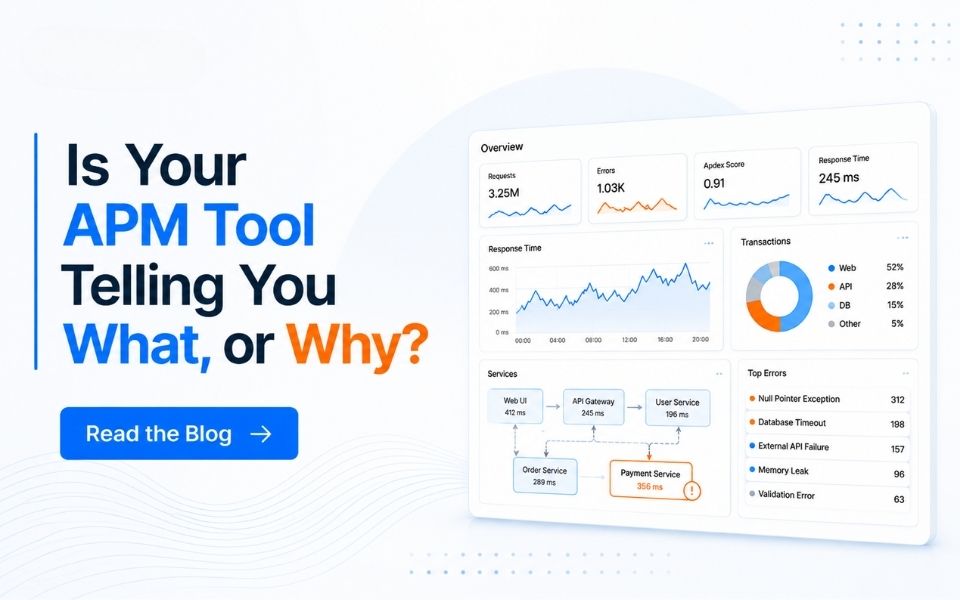
Application Performance Monitoring: The 2026 Guide to Key Metrics, Tools, and Root Cause Analysis
Modern applications rarely fail in one obvious place. A slow checkout page might trace back to a database query three services away. A spike in errors might be a downstream API silently timing out. Application…
- Sep 02
Categories
Latest Post

AI document processing: automating binder-to-policy review
- October 1, 2026


How AI Tests AI: Inside Autonomous Quality Engineering
- September 18, 2026

google-site-verification: google57baff8b2caac9d7.html

Headquarters
8845 Governors Hill Dr, Suite 201
Cincinnati, OH 45249
Our Branches
Cincinnati | Jacksonville | Indianapolis | London | Hyderabad | Bangalore | Pune
Narwal | © 2024 All rights reserved