
For today’s CIOs, quality is no longer just a checkpoint, it’s a continuous, strategic enabler of speed, resilience, and innovation. In an era where enterprises are expected to release faster, adapt continuously, and deliver consistently across platforms, the traditional approach of Quality Assurance (QA) is giving way to a more holistic, future-ready discipline: Quality Engineering (QE).
Quality Engineering combines automation, AI, DevOps, and shift-left practices to create a continuous, intelligent quality ecosystem. The growing use of AI in software testing is a big part of that shift, and as digital transformation accelerates, CIOs are reimagining testing not just as a support function but as a driver of competitive advantage. This blog explores how CIOs are pivoting from QA to QE to lead smarter, agile, AI-powered digital initiatives.
Why the Shift from QA to QE?
Traditional QA methods were designed for linear development models often functioning as a reactive layer at the end of the SDLC. But with modern agile and DevOps pipelines, testing needs to happen continuously and intelligently across every stage of development.
This shift is being driven by:
- Speed-to-market pressures: Releasing weekly or even daily requires early and continuous testing.
- Customer expectations: Flawless digital experiences are now non-negotiable.
- Complex architectures: Microservices, APIs, cloud-native systems, and integrations require more robust quality strategies.
- AI and automation adoption: These technologies demand new skill sets, tools, and governance models.
As a result, CIOs are replacing fragmented QA practices with QE models that focus on:
- Prevention over detection
- Automation over manual testing
- Integration over isolation
- Continuous feedback over phase-end sign-offs
The CIO’s QE Mandate: What It Looks Like
From a CIO’s lens, successful QE strategies are marked by the following pillars:
1. Intelligent Test Automation at Scale
Modern QE is powered by automation frameworks that are intelligent, adaptive, and scalable. CIOs are investing in AI-powered automation for:
- Script generation and healing
- Test data creation
- Predictive defect analysis
- Impact-based testing
Tools and accelerators like Narwal Automation FrameworkX (NAX) and Narwal Intelligent Lifecycle Assurance (NILA) reduce test cycle time by up to 30–50%.
2. Shift-Left and Shift-Right Testing
CIOs are promoting shift-left testing to embed quality early during requirements, design, and development and shift-right testing to ensure production resilience via observability, AIOps, and chaos engineering.
3. AI-Driven Test Intelligence
From root-cause analysis to user behavior modeling, AI enables smarter decisions and resource allocation. QE shifts from being reactive to predictive.
AI’s role in QE actually spans two distinct problems, and enterprises often blur them together. It is worth separating them out.
AI Used in Software Testing
This is AI applied to make testing itself faster and smarter. In practice, that includes:
- Test case generation from requirements or user stories
- Test data generation for edge cases and privacy-safe datasets
- Test prioritization based on code churn and business risk
- Defect prediction and root-cause analysis
- Self-healing automation that adapts scripts when the UI or API changes
- Intelligent regression selection, so teams stop running the full suite for every change
- Test maintenance, flagging brittle or redundant test cases over time
Testing AI-Powered Applications
This is a different discipline: validating the AI systems the enterprise is now shipping. These systems introduce quality concerns that traditional QA checklists were never built for, including:
- Accuracy and reliability of model outputs
- Bias in training data or model behavior
- Hallucination and factual grounding
- Robustness under adversarial or edge-case inputs
- Security of models, prompts, and data pipelines
- Data quality feeding the model
- Model and agent behavior in multi-step or autonomous workflows
- Governance: who signs off on an AI system before it ships
CIOs evaluating QE maturity should treat these as two separate workstreams with different skills, tools, and risk profiles, not a single line item called “AI testing.”
4. QE in DevOps and Agile Pipelines
DevOps success depends on embedded, continuous testing. CIOs are enabling pipelines with self-healing scripts, service virtualization, CI/CD integration, and real-time dashboards.
5. Enterprise Application Testing
With mission-critical platforms like SAP, Salesforce, and Oracle in play, CIOs are relying on enterprise-grade methodologies like Narwal NEAT to validate releases without compromising agility.
Business Impact: QE Beyond the Bug Count
CIOs who invest in Quality Engineering are seeing measurable business impact:
- Up to 40% reduction in release cycle time
- Over 60% decrease in production defect leakage
- Improved customer satisfaction and digital experience scores
- Lower total cost of quality and fewer critical outages
- Better compliance posture and risk management
More importantly, QE becomes a culture of continuous improvement and shared ownership aligned with the business.
The Strategic Advantage of QE
Modern CIOs are not just tech leaders they are enablers of enterprise transformation. With AI-first, platform-driven business models becoming the standard, QE is no longer a backend responsibility. It’s a strategic differentiator.
By pivoting from QA to QE, CIOs ensure quality is engineered into every experience proactively, intelligently, and at scale.
How Narwal Helps Enterprises Transition From QA to QE
Narwal supports enterprises at every stage of the QA-to-QE journey, from initial QE assessment through to enterprise-wide scale. That includes:
- QE assessment and test advisory to establish where an organization sits on its QA-to-QE journey
- QE transformation programs that sequence shift-left and shift-right adoption
- Test automation and AI testing built around the specific applications in scope
- Enterprise application testing for platforms like SAP, Salesforce, and Oracle
- Continuous quality and quality intelligence practices that carry through into production
Three proprietary accelerators support this work directly. NAX targets intelligent, adaptive test automation, including script generation and self-healing, to cut the manual maintenance burden that usually stalls automation programs. NILA applies AI across the testing lifecycle for predictive defect analysis and impact-based testing, so teams can prioritize what actually needs attention. NEAT is purpose-built for SAP testing on reusable TOSCA modules, and extends the same approach to other mission-critical enterprise platforms without slowing down release cycles.
Experience QE Through the CIO’s Eyes Live
Narwal is proud to bring Ervan Rodgers to the stage at QA or the Highway 2025!
As a Gold Sponsor of this premier event, we’re thrilled to support conversations shaping the future of Quality Engineering.
With decades of leadership as a two-time CIO and award-winning tech executive, Ervan will explore how today’s most forward-thinking CIOs are turning QE into a strategic advantage—not just a checkpoint.
From automation to GenAI in testing, Ervan’s session delivers practical insights for QA leaders, technologists, and enterprise innovators.
Catch him live on June 27, 2025 | Columbus, OH | Reserve your spot: qaorthehwy.com
Frequently Asked Questions
QA is a phase-based function focused on finding defects before release. QE is a continuous, cross-functional discipline focused on preventing defects and building quality into the entire SDLC.
AI speeds up testing itself, through test case generation, self-healing automation, and defect prediction, and it introduces a second discipline: testing the AI-powered applications the enterprise now ships.
Faster release cycles, cloud-native architectures, rising software complexity, AI adoption, and higher customer expectations have made end-of-cycle testing too slow and too late to catch what matters.
Start by assessing current QA maturity, then sequence automation, shift-left and shift-right practices, AI-assisted testing, and governance.
No. Automation is one component of QE. QE also includes shift-left and shift-right practices, continuous testing, quality governance, and AI-assisted testing.
Related Posts

AI document processing: automating binder-to-policy review
Summary AI document processing can take the manual, field-by-field work out of binder-to-policy review, where quiet mismatches in commercial insurance are easy to miss. Narwal repurposed its existing RAG Bot accelerator into a placement-ready workflow…

- Oct 01
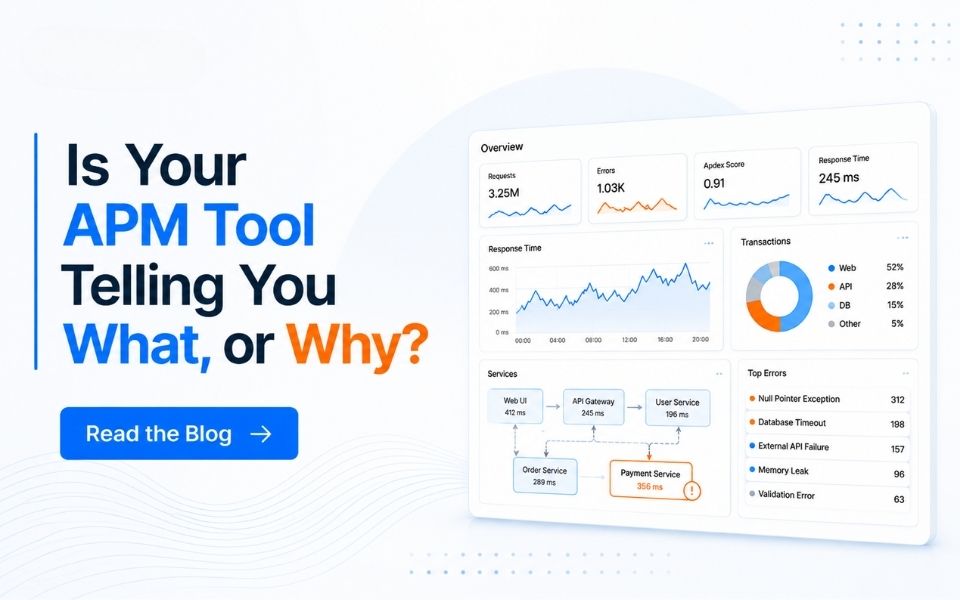
Application Performance Monitoring: The 2026 Guide to Key Metrics, Tools, and Root Cause Analysis
Modern applications rarely fail in one obvious place. A slow checkout page might trace back to a database query three services away. A spike in errors might be a downstream API silently timing out. Application…
- Sep 02
Categories
Latest Post


AI document processing: automating binder-to-policy review
- October 1, 2026


How AI Tests AI: Inside Autonomous Quality Engineering
- September 18, 2026

Headquarters
8845 Governors Hill Dr, Suite 201
Cincinnati, OH 45249
Our Branches
Cincinnati | Jacksonville | Indianapolis | London | Hyderabad | Bangalore | Pune
Narwal | © 2024 All rights reserved