
In the modern enterprise, data is not just a byproduct of operations it is the foundation of strategic decisions. Nowhere is this more evident than in Business Intelligence (BI) dashboards, which inform investments, resource allocations, customer insights, and regulatory actions. But what happens when these dashboards are fed flawed or unvalidated data?
The result is not just inaccurate reports it’s a breakdown of trust in the entire data ecosystem, and it is why more enterprises are turning to data integrity automation to catch problems before they reach a dashboard.
What Is Automated Data Integrity?
Automated data integrity is the process of continuously validating, reconciling, and monitoring enterprise data throughout the pipeline to ensure accurate business intelligence, regulatory compliance, and trusted decision-making.
Rather than relying on static scripts or one-off spreadsheet checks, data integrity automation applies a data validation framework across every stage of the pipeline, from ingestion to the final dashboard. It combines data observability, data lineage tracking, and data profiling so teams can trust the numbers behind every report.
Why Data Integrity Is Critical for Business Intelligence Reporting
A BI dashboard is only as reliable as the data flowing into it. But as enterprises ingest growing volumes of information, over 80% of which is unstructured, ensuring that data is accurate, consistent, and audit-ready has become a daunting challenge.
Data now flows from hundreds of disparate systems mainframes, ERPs, third-party APIs, IoT sensors, and unstructured sources like XMLs, logs, and PDFs. Each introduces new complexity and opportunity for errors across the pipeline.
According to Gartner, the average enterprise loses $15 million annually due to poor data quality. These losses are often invisible at first skewed performance dashboards, unnoticed transformation errors, or reconciliation mismatches that are only discovered during audits or compliance checks. This is where enterprise data governance and business intelligence governance need to work together, not apart.
Common Causes of BI Reporting Failures
Traditional QA and validation processes built on static scripts, spreadsheet checks, or sampling are no match for today’s complex, high-volume environments. Here’s why manual processes break down:
- Low test coverage for unstructured and semi-structured data
- Delayed detection of errors across transformation and reconciliation
- No data lineage or audit trail, which limits traceability during compliance reviews
- High maintenance costs with little scalability
- Gaps in source-to-target validation across hybrid architectures
For organizations operating across hybrid architectures on-prem, cloud, and data lakes the last mile of validation is often missing. That’s where automation, intelligence, and scale must converge.
How Automated Data Integrity Prevents Reporting Errors
To address this, Narwal and Tricentis have partnered to deliver a high-precision, automation-first approach to data quality automation, one that spans ingestion to final dashboard rendering.
At the heart of this approach is Tricentis Data Integrity, a no-code platform that enables complete end-to-end end-to-end data integrity testing across data pipelines.
Key Components of an Automated Data Integrity Framework
An effective data validation framework rests on six layers of automated data integrity validation:
- Pre-Ingestion Validation: Ensures source data meets structural and format requirements before entering staging areas. Think: schema conformance, field-level constraints, and null checks.
- Ingestion Monitoring: Provides real-time data intake tracking across streaming and batch systems. Includes volume consistency, timestamp accuracy, and ingestion lag alerts.
- Transformation Logic Testing, or ETL and ELT validation: Validates complex ETL processes. Ensures data joins, aggregations, and derived columns adhere to business logic and transformation specifications.
- Reconciliation Testing: Conducts source-to-target comparisons file-to-database, database-to-lake, or JSON-to-table ensuring field-level consistency and referential integrity. This is the core of data reconciliation automation.
- Continuous Monitoring & Trend Profiling: Automates anomaly detection using baseline patterns. Identifies data drift, sudden spikes, and out-of-range values before they hit production reports.
- BI Report Validation: Validates dashboard layers by comparing report outputs against expected logic and underlying raw data. Ensures KPIs and visualizations match source truth.
Automated Data Validation Across Modern Data Pipelines
While tools provide the platform, Narwal delivers the implementation strategy, customization, and scalability needed for enterprise data pipeline validation at scale.
From validating over 400+ XML formats to enabling mainframe-to-Databricks reconciliation, Narwal has helped enterprises create automated pipelines that not only pass QA but drive decision-ready confidence at scale.
Benefits of Automated Data Integrity for Enterprises
Enterprise clients that have adopted the Narwal + Tricentis approach have reported:
- 90% test coverage across unstructured and structured data
- 75% reduction in QA cycle times, accelerating time-to-insight
- 4x cost savings by eliminating manual test creation and execution
- Audit-ready dashboards for financial, regulatory, and executive review
These results aren’t just operational improvements they are trust enablers. They allow CFOs to rely on forecasts, compliance teams to pass audits, and business leaders to steer with confidence using consistent data quality metrics.
Best Practices for Implementing Automated Data Integrity
As data ecosystems evolve to include multi-cloud, hybrid warehouses, and real-time analytics platforms, governance needs to be embedded not bolted on. A strong BI data validation program typically includes:
Automated data validation:
- Continuous data validation built into every pipeline stage, not just pre-launch testing
- Strengthens data observability and pipeline monitoring so issues are flagged before they reach a report
- Documented data lineage and an audit trail for every transformation
- Root cause analysis built into the workflow so errors are fixed at the source, not just flagged
- Aligns data engineering with business KPIs, with clear ownership between data engineering and BI governance teams
By embedding validation at every stage, organizations reduce the operational, reputational, and regulatory risks of decision-making based on untrusted data.
The Role of AI and Automation in Data Integrity
Looking forward, Narwal is working with partners to embed AI/ML into AI-based anomaly detection, predictive QA, and root cause analysis. Future-ready BI pipelines won’t just validate data. They’ll self-heal, adapt, and optimize continuously.
Expect to see integrations with tools like Databricks, Snowflake, and Power BI, driving real-time data integrity testing across data fabrics.
Explore Narwal’s AI services to see how these capabilities fit into a broader AI strategy.
How Tricentis Data Integrity Enables Trusted Business Reporting
Tricentis Data Integrity gives enterprises a single, no-code platform for automated data validation, from the first ingestion check to the final dashboard render. Paired with Narwal’s delivery expertise, it turns data integrity automation from a one-time audit exercise into a continuous, scalable practice that BI, compliance, and finance teams can all rely on.
Frequently Asked Questions
Data integrity automation uses automated validation, reconciliation, and continuous monitoring to ensure enterprise data remains accurate, consistent, and reliable across data pipelines and BI reporting systems.
Automated data validation catches errors as data moves through the pipeline instead of after it reaches a report, which reduces the risk of decisions being made on flawed numbers.
It validates data at every stage, from pre-ingestion checks through BI report validation, so errors are caught before they can distort a dashboard or KPI.
BI data validation compares dashboard outputs against the underlying raw data and business logic to confirm that reports reflect source truth.
Enterprises typically layer schema checks, transformation logic testing, reconciliation testing, and continuous monitoring into a single automated data quality framework rather than relying on manual spot checks.
Automated reconciliation shortens QA cycles, improves audit readiness, and catches source-to-target mismatches that manual sampling would likely miss.
By validating data at ingestion, transformation, and reconciliation stages, data pipeline validation prevents small errors from compounding into inaccurate business intelligence reports.
Platforms like Tricentis Data Integrity, paired with an implementation partner like Narwal, give enterprises a no-code way to run enterprise data integrity automation across hybrid and multi-cloud environments.
Join Us Live – Learn How It’s Done
If you’re ready to modernize your BI pipeline, don’t miss our upcoming webinar. See how leading organizations are leveraging automation to prevent BI reporting failures, reduce QA debt, and unlock confident decision-making.
Register now for the webinar – Automating Data Quality: How to Prevent Costly BI Reporting Errors Date: May 7, 2025 | Time: 11:15 AM – 12:30 PM EST
Join the experts from Narwal and Tricentis for a live, use-case driven session designed to help you rethink your approach to enterprise data quality.
Related Posts

AI document processing: automating binder-to-policy review
Summary AI document processing can take the manual, field-by-field work out of binder-to-policy review, where quiet mismatches in commercial insurance are easy to miss. Narwal repurposed its existing RAG Bot accelerator into a placement-ready workflow…

- Oct 01
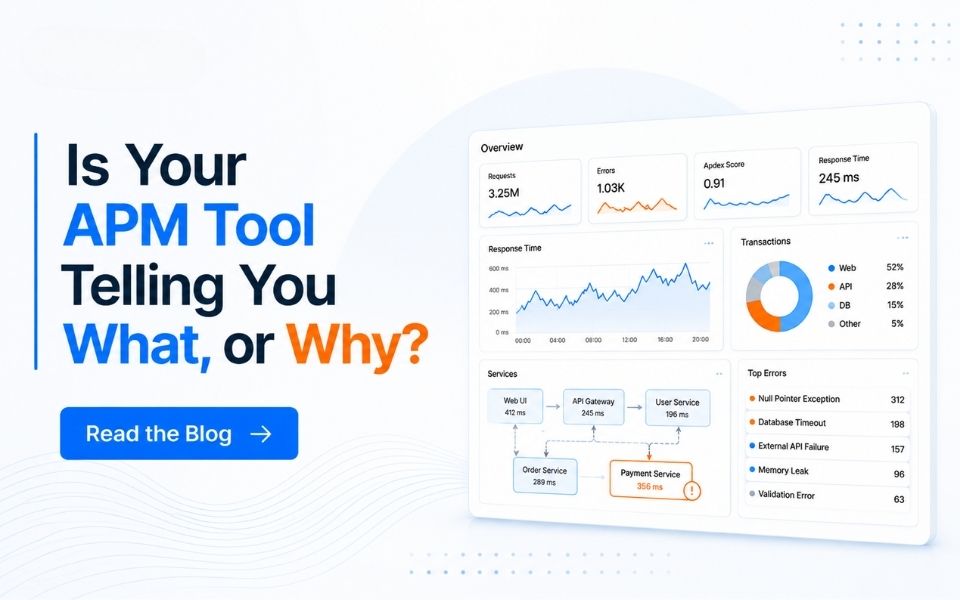
Application Performance Monitoring: The 2026 Guide to Key Metrics, Tools, and Root Cause Analysis
Modern applications rarely fail in one obvious place. A slow checkout page might trace back to a database query three services away. A spike in errors might be a downstream API silently timing out. Application…
- Sep 02
Categories
Latest Post


AI document processing: automating binder-to-policy review
- October 1, 2026


How AI Tests AI: Inside Autonomous Quality Engineering
- September 18, 2026

Headquarters
8845 Governors Hill Dr, Suite 201
Cincinnati, OH 45249
Our Branches
Cincinnati | Jacksonville | Indianapolis | London | Hyderabad | Bangalore | Pune
Narwal | © 2024 All rights reserved